


Unité 11 de Le Corbusier
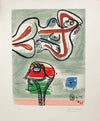
Unité 11 de Le Corbusier
- Año: 1965
- Técnica: Aguafuerte firmado y numerado a mano
- Tamaño: 45 x 57 cm
- Edición: 160
UNITÉ es el título del libro creado por el artista y arquitecto Charles-Édouard Jeanneret (La Chaux-de-fonds, 1887 - Roquebrune-Cap-Martin, 1965), mayormente conocido como Le Corbusier, producido entre 1963 y 1965. El libro consta de 20 aguafuertes firmados en plancha, donde se despliega el característico estilo de Le Corbusier, combinando las formas abstractas con el uso de líneas arquitectónicas, acompañadas de una paleta limitada que realza una estética claramente modernista y nos remite a las creaciones arquitectónicas del artista.
BIOGRAPHY AND FINANCIAL DATA

BIOGRAPHY AND FINANCIAL DATA
Le Corbusier (Switzerland, 1887–France, 1965), the professional pseudonym of Charles-Édouard Jeanneret, studied arts and crafts in La Chaux-de-Fonds, worked at Auguste Perret’s studio in Paris, and collaborated with Peter Behrens in Germany, where he...
Leer más
Economic information
Revalue
Status
Ranking

We are experts
With more than 20 years of
experience in collecting and
art market, we select
outstanding works of art
galleries.

Online advice
We offer you a service of
personalized advice without
commitment, and receives the
proposals from our experts.

Certified works
All the cbrasdearteque
you will find on our store
ring cuartan with Certificate of
Aitamiodad.

Pay comfortably
Buy art by paying in 3 installments
interest-free or in 12 months
thanks to Sequra.